
Dealerships spend significant time and money generating demand and training teams to convert it. Between those two investments sits another part of the lead funnel that deserves the same attention: the infrastructure carrying the customer inquiry into the dealership and the dealership's response back to the customer.
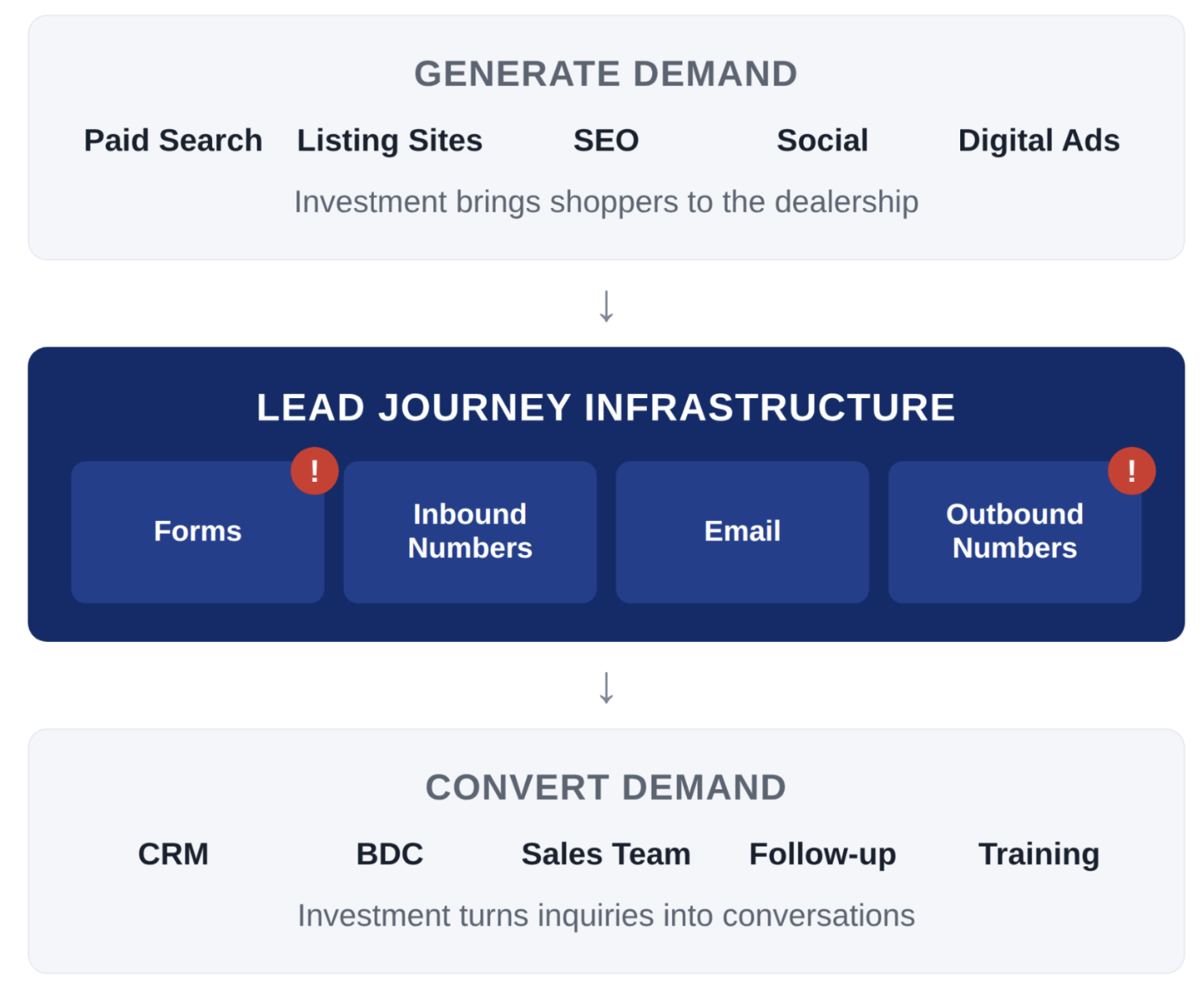
Advertising generates the opportunity. Sales teams work the opportunity. The infrastructure in the middle has to carry it successfully between the two, and it is where hidden failures occur.
Dealerships invest heavily at both ends of the funnel
Dealerships spend significant time and money on both ends of the lead funnel.
On one end is demand generation: paid search, listing sites, SEO, social media and other advertising designed to bring shoppers into the dealership. On the other is the sales operation: CRM processes, BDC teams, response-time targets, scripts, coaching and training designed to turn those inquiries into conversations.
In 2025, the average U.S. franchised dealership spent an estimated $586,246 on advertising, according to NADA. Across the industry, that amounted to almost $10 billion.
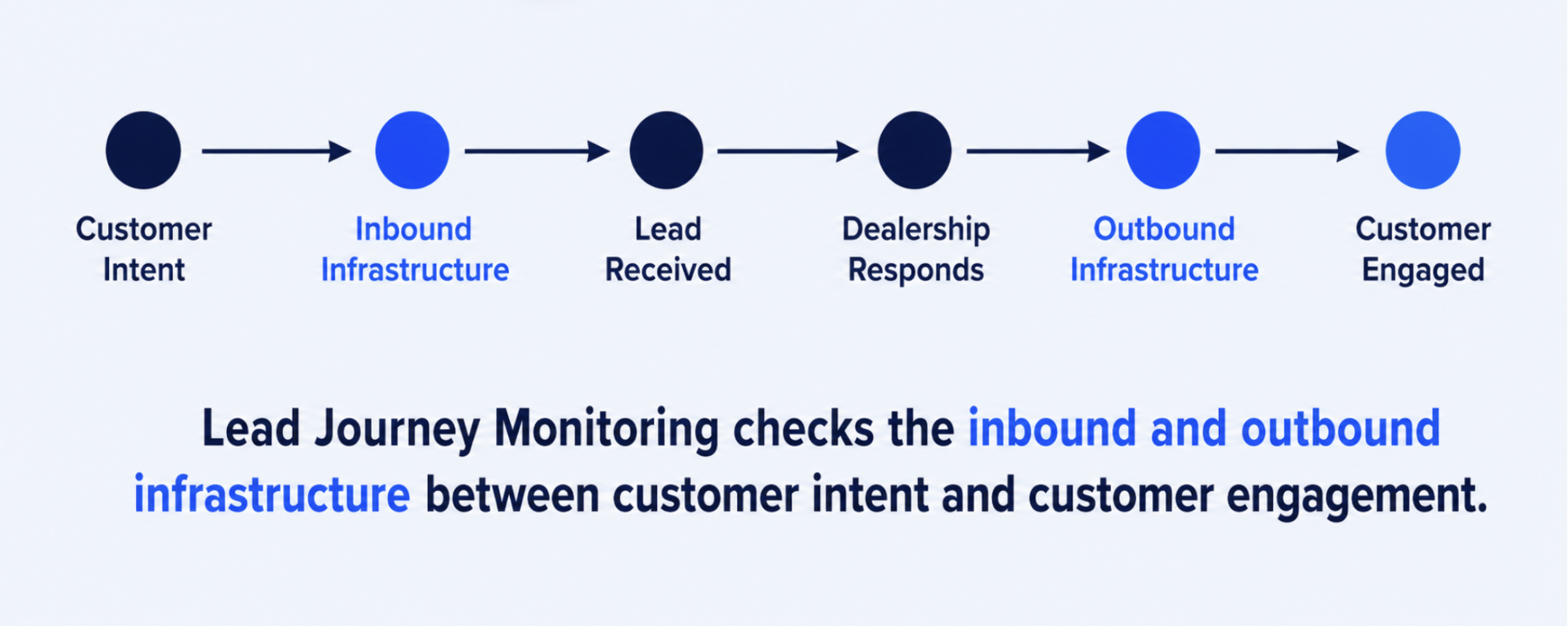
There is another part of the funnel that deserves the same attention: the infrastructure carrying the lead from the customer to the dealership, and the dealership's response back to the customer.
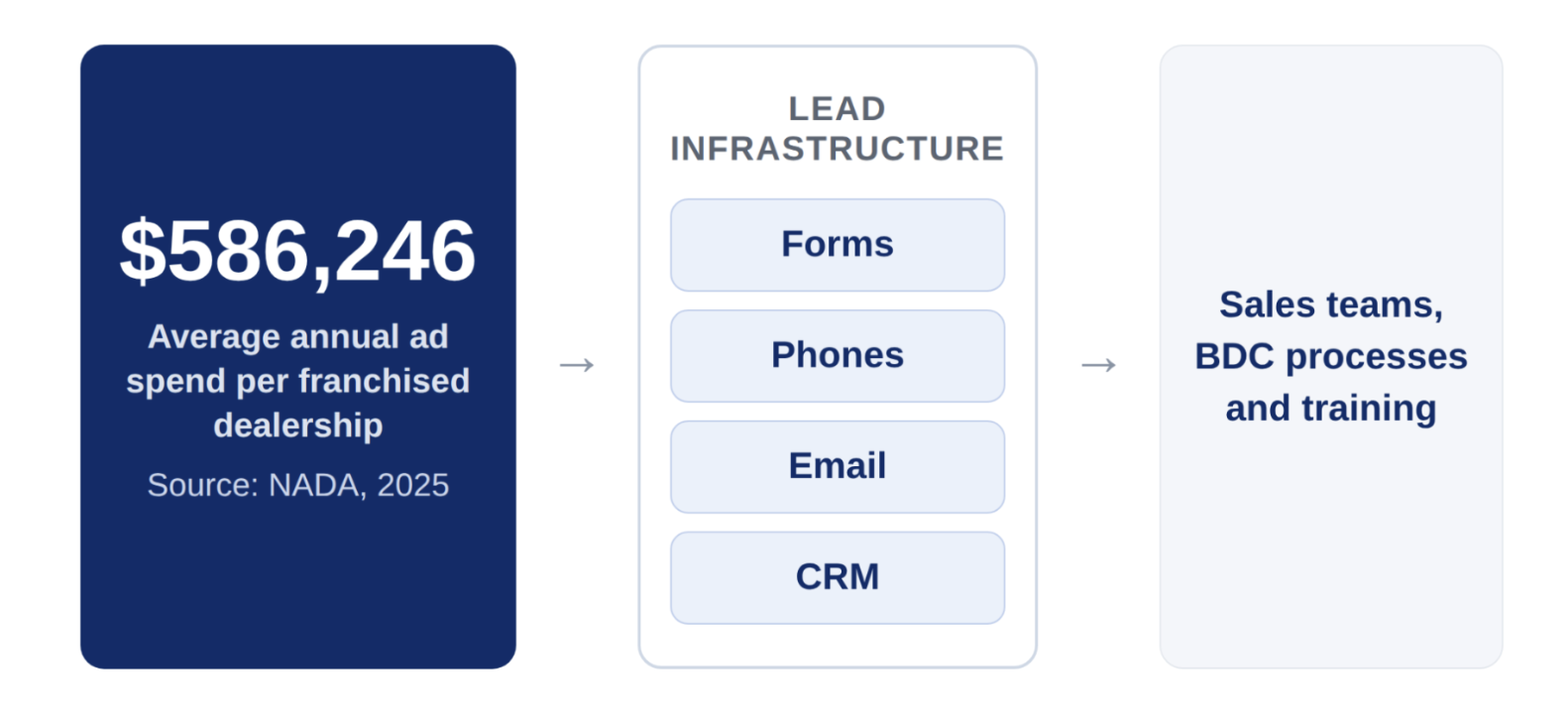
Significant investment sits on both sides of infrastructure that is often assumed to work.
The lead journey infrastructure
A modern dealership can have dozens of customer-facing paths operating at the same time.
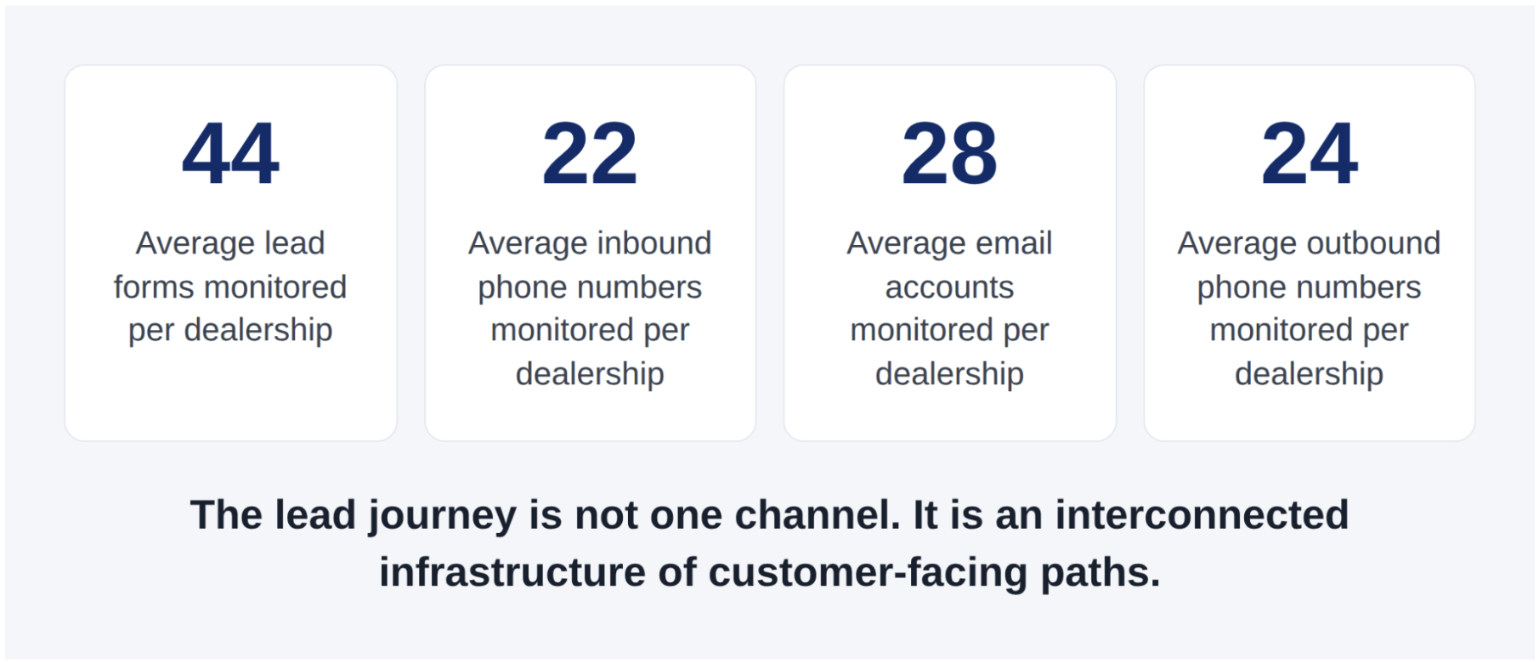
Across dealerships monitored by LeadVantage, the average dealership uses 44 lead forms, 22 inbound phone numbers, 28 email accounts and 24 outbound phone numbers to support its lead-handling process.
These are not fixed dealership benchmarks. They illustrate how fragmented the lead environment can become once every customer path is accounted for.
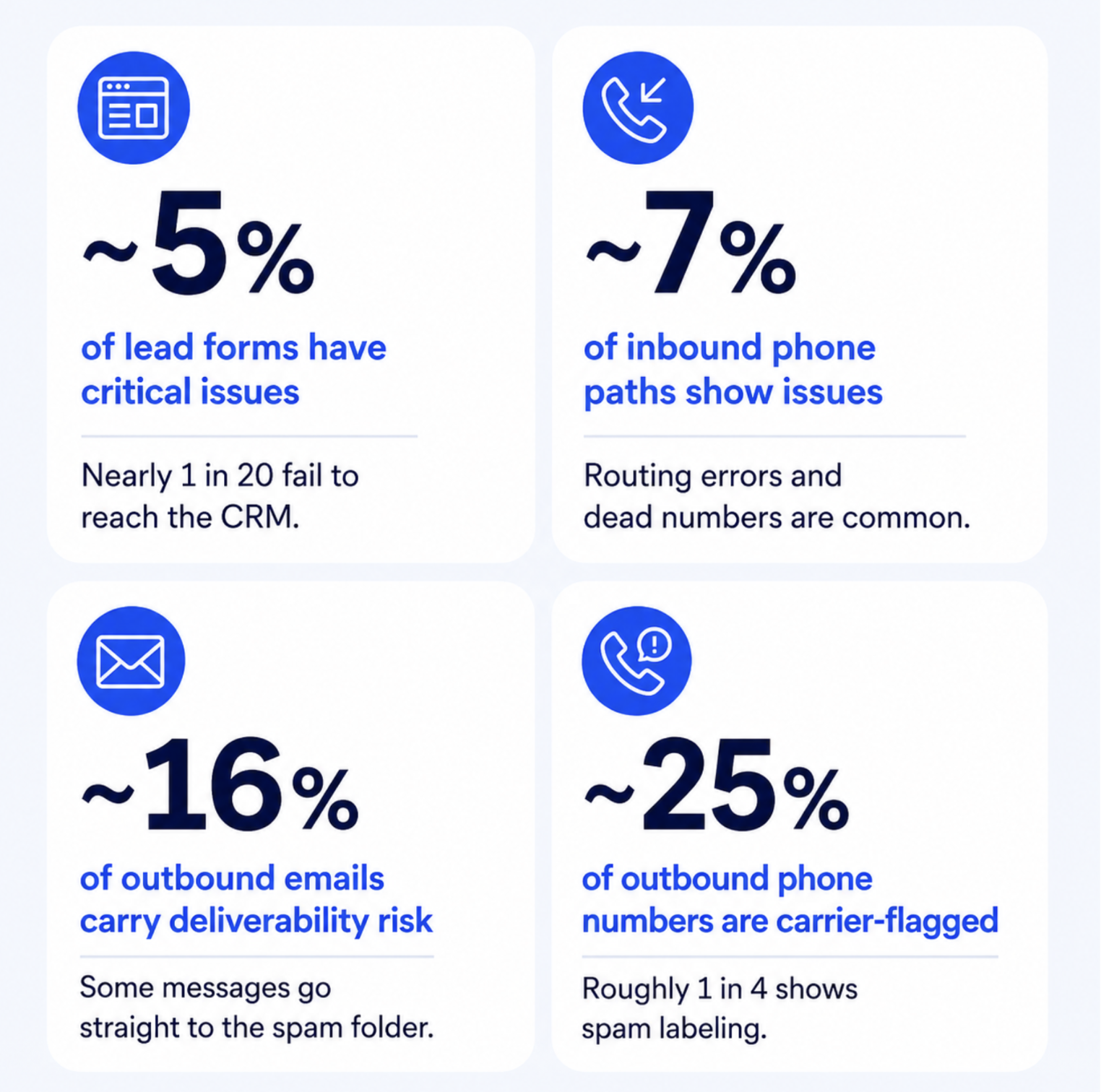
Each path has a job to do. Forms need to deliver inquiries to the right destination. Inbound numbers need to connect and route correctly. Emails need to reach the intended inbox. Outbound numbers need to reach customers without being labeled as spam or suspicious.
When that infrastructure fails, the investment around it loses leverage. Sales training cannot recover an inquiry that never reaches the CRM. Faster follow-up has limited value when the dealership's number appears as “Potential Spam.” Increasing advertising simply sends more demand through the same customer paths.
Some of that leakage is already visible
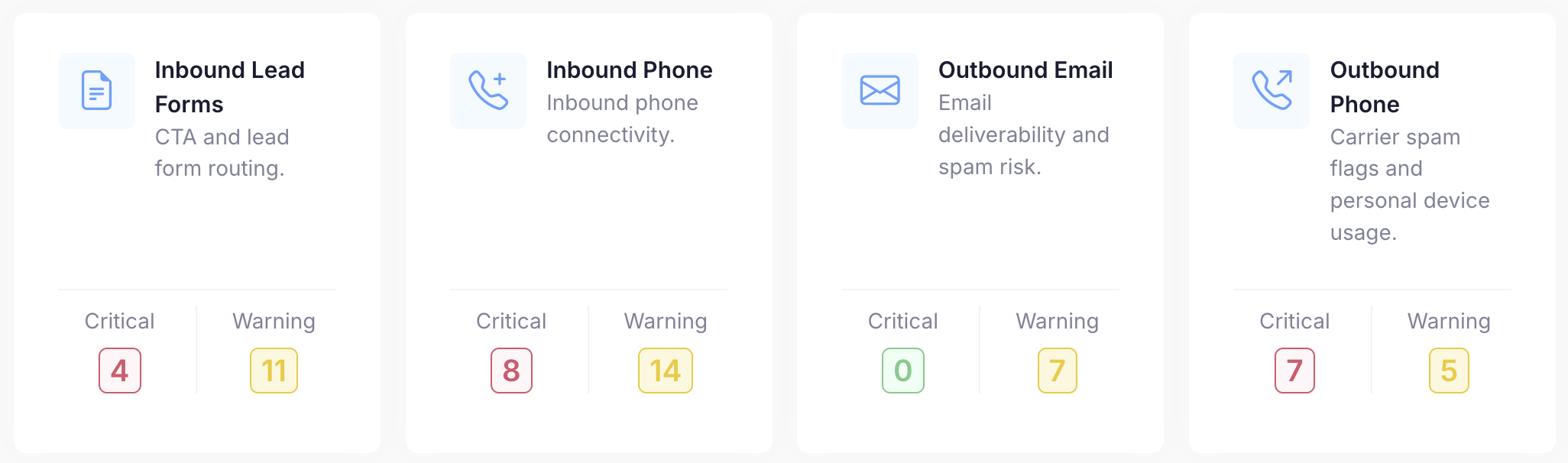
LeadVantage’s monitoring is already identifying issues across the infrastructure that carries a lead from first contact to the dealership team.
Protect your marketing investment
Lead generation, technology and training all remain important. They work best when the paths connecting them are healthy. Lead performance should therefore include regular checks of the infrastructure itself.
Dealerships need visibility into whether:
- website forms are delivering submissions correctly;
- inbound numbers remain active and route customers to the right place;
- customer-facing phone numbers remain free of carrier spam flags;
- dealership emails are reaching their intended destination;
- outbound numbers maintain a healthy carrier reputation.
This changes the performance conversation. Instead of looking only at how many leads were generated and how quickly the sales team responded, dealerships can also understand whether those leads had a functioning path from customer intent to dealership response.
Before increasing lead volume, make sure the journey carrying those leads can support the investment already being made.
See what is happening across your lead journey.
A LeadVantage Health Check reviews public-facing paths customers use to reach and hear back from your dealership.

SOURCES
NADA Data 2025: Average dealership advertising expense of $586,246 and approximately $10 billion in industry advertising expenditure. See page 16: https://www.nada.org/media/4695/download?inline=
LeadVantage Lead Journey Monitoring: All LeadVantage monitoring figures are based on early aggregated findings.